The Incrementality Problem with Performance Max
Why treating every conversion like it's worth the same is costing your business
This post was authored by Foxwell Founders community member Kaena Miller owner and founder of Red Blind Media
Why It Matters
Most advertisers are optimizing to a number that's lying to them. If your ROAS dashboard says brand search is your best channel, you're probably right by the numbers Google shows you and wrong about what's actually driving revenue. The gap between attributed performance and incremental lift isn't a rounding error. It's the difference between spending your budget on new demand versus spending it on customers who were coming anyway. Once you can see that gap, letting a single automated system make blended decisions across every placement stops looking efficient and starts looking like you're leaving margin on the table in the channels that actually grow the business.
Who This Is For
This message is for Founders, especially those in the DTC and ecommerce space within the Foxwell Founders community. If you're managing significant Google ad spend, beyond relying on PMax's "just trust the algorithm" advice, and you prefer to control your account structure rather than let Google's automation take over, this is for you. If you've ever felt that nagging thought that your in-platform ROAS doesn't quite match up with your actual revenue when you pause campaigns, this framework will help you understand why that happens. Plus, it guides you in building a Google account that truly reflects how your business makes money, not just how Google's optimizer reports it.
Performance Max sells an incredible promise. Give it your assets — images, video, headlines, product feed — and Google will algorithmically assemble them across Search, Shopping, Display, YouTube, Gmail, and Discover to hit your ROAS target (I’m allowed one good em-dash, don’t hate). It's elegant, it's automated, and for a certain type of advertiser, it works.
But PMax operates under a critical assumption that most advertisers never stop to question: Are all conversions equal? Does 1 conversion = 1 conversion?
A purchase from a brand search query, a purchase from a Shopping ad, and a purchase from a YouTube view-through are all treated identically by the algorithm. They feed the same ROAS target. They carry the same weight in the optimization model.

“50/50 odds, really” –PMax
“50/50 odds, really” –PMax
The problem? Through incrementality testing (geo holdouts and matched-market experiments) we know these conversions are emphatically not worth the same.
The Incrementality Gradient
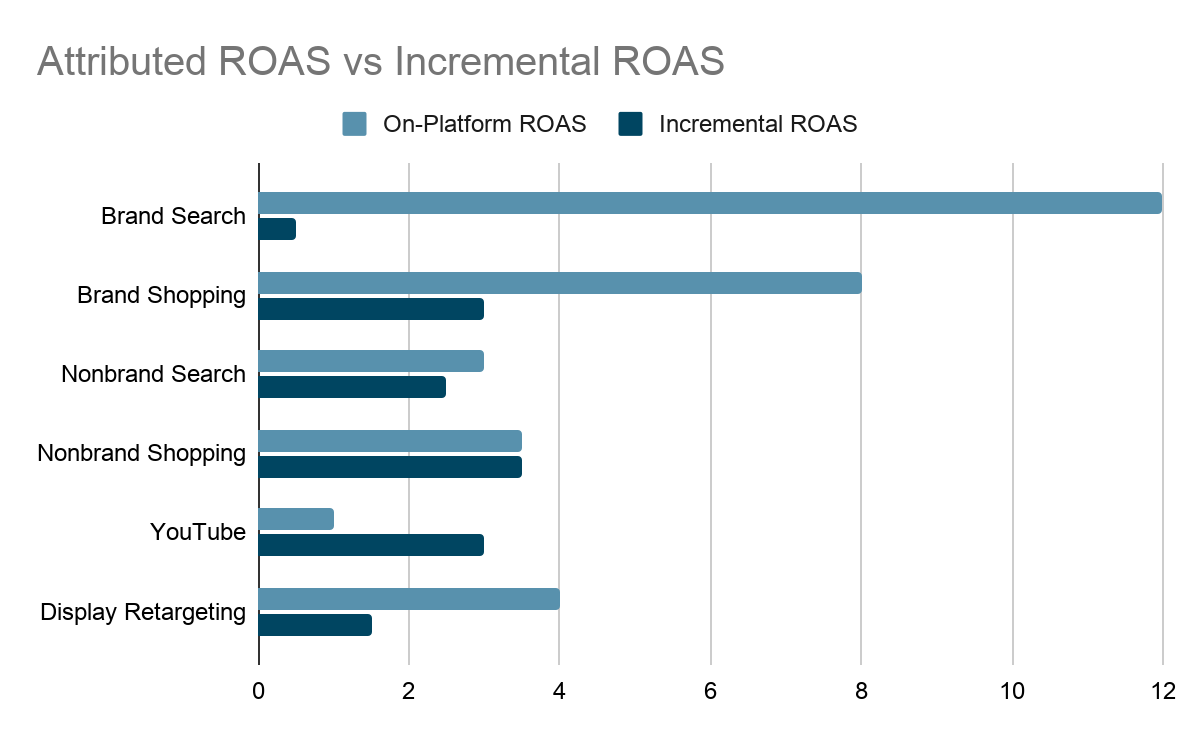
If you've run geo holdout tests or any form of incrementality measurement, you've probably seen this pattern play out:
| Placement | Attributed ROAS | Incremental ROAS | Incrementality factor |
|---|---|---|---|
| Brand search | 8-12x | 0-2x | ~5-15% |
| Brand shopping | 5-8x | 2-4x | ~30-50% |
| Non-brand shopping | 2-3x | 2-3x | ~100% |
| Non-brand search | 2-3x | 1.5-2.5x | ~60-70% |
| Display (remarketing) | 3-5x | 1-2x | ~25-35% |
| YouTube | 0.5-2x | 2-5x | 200%+ |
These are directional ranges from our testing. Your mileage will vary by brand, category, and maturity.
Real workflows, real tools, real operators and no theory. Subscribe to the newsletter and see what's actually working right now.
Notice something? The channels that look best in-platform (Brand Search, remarketing Display) have the lowest incrementality. The channels that look worst in-platform (YouTube) often have the highest.
The Blended Target Problem
Because PMax optimizes to a single ROAS target across all these channels, you can't tell it: "Brand Shopping is incremental but Brand Search isn't. YouTube needs a looser target because it drives future conversions. Display retargeting needs a tighter target because it's mostly cannibalizing organic."
You get one number. And that number inevitably gets set to protect against the lowest-common-denominator channel, leaving money on the table everywhere else.
Negative keyword lists, URL exclusions, and campaign naming conventions. MCP provides the operational playbook to your AI tools, preventing the need to rebuild these from scratch for each account.
Where PMax Goes Wrong
PMax is a greed optimizer. It finds the path of least resistance to a conversion within your ROAS target. And the easiest conversions in Google's ecosystem are brand search queries.
I’m not saying that Google is intentionally trying to screw over unsavvy advertisers, but…
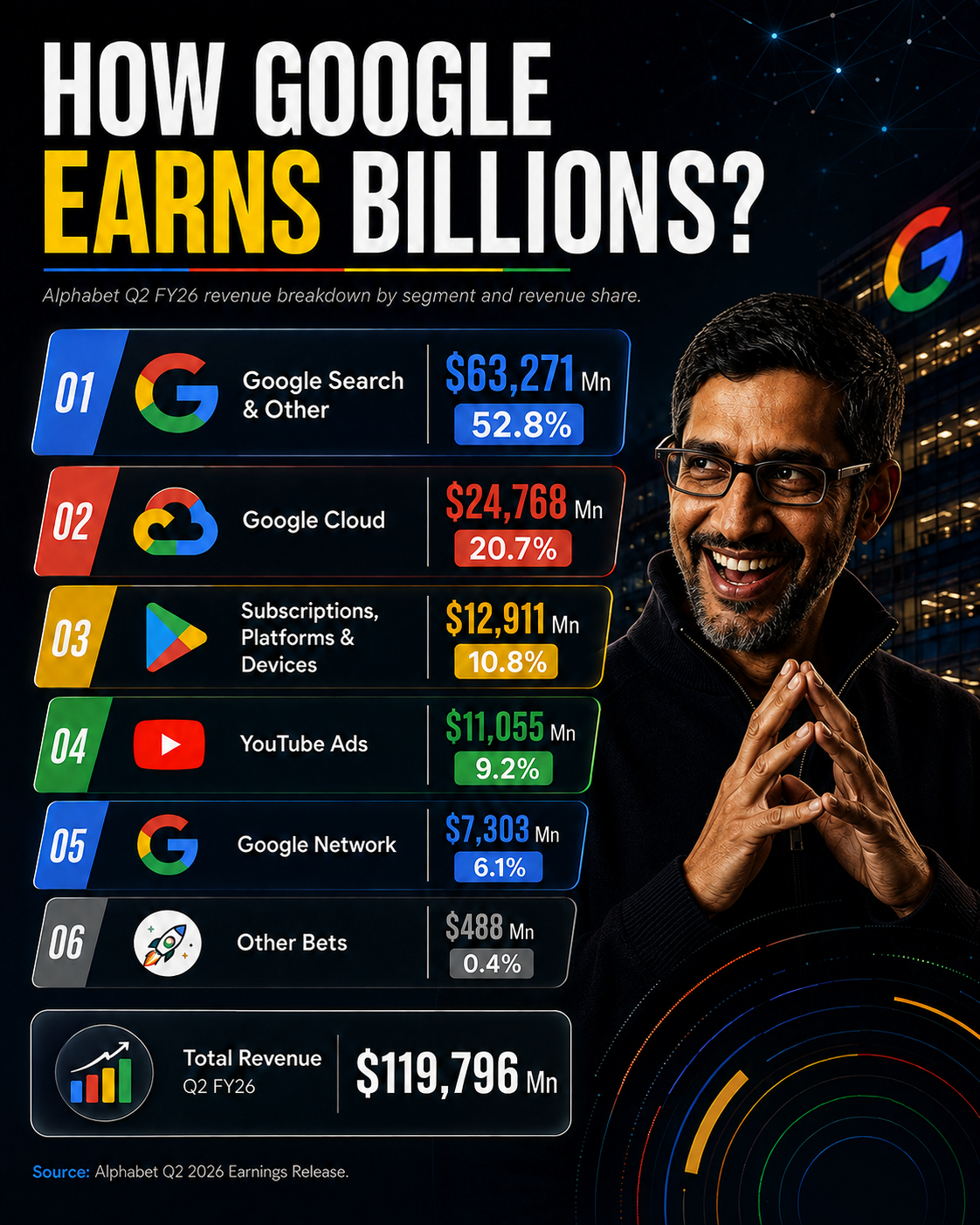
Ball don’t lie.
Here's what that means in practice:
1. PMax Over-Invests in Brand Search
When you run a PMax campaign without brand exclusions (or even with them — the feature is imperfect), the algorithm discovers quickly that brand terms convert at a ROAS than anything else. It funnels spend there. But most of those brand search clicks were coming to your site anyway. You're paying for traffic you already owned.
We've run multiple geo holdout tests where turning off brand search spend entirely showed less than a 5% drop in total revenue. The incrementality of brand search, especially for established brands, is near zero.
2. PMax Under-Invests in YouTube
On the flip side, YouTube is woefully undervalued in PMax. YouTube conversions are notoriously under-reported. Conversions that occur outside of what Google can track or attribute don't feed back into the optimization loop. So PMax sees YouTube as underperforming relative to other channels and starves it of budget.
Yet our incrementality testing consistently shows YouTube has the highest delta between attributed performance and actual incremental lift per dollar of any Google channel. The attributable conversion data doesn't capture the full-funnel effect: brand searches that happen weeks later, direct traffic lifts, and cross-channel influence that YouTube drives.
PMax systematically underspends on your most incremental channel because its objective function is misaligned with your business reality.
3. PMax Misallocates Display Spend
When non-brand PMax serves on Display (GDN, Gmail, Discover), it's typically retargeting the warmest possible audience: people who have visited your site but haven't purchased. These placements convert well in-platform because they're bottom-of-funnel, but they're also some of the least incremental dollars you can spend. You're showing an ad to someone who was already going to buy.
Meanwhile, placements like non-brand Search and Shopping are genuinely incremental placements that generate new demand.
Demand Gen Has the Same Problem
Demand Gen suffers from a similar affliction, just with a slightly different flavor. Like PMax, it can serve across multiple placements (YouTube, Discover, Gmail, and the Display Network). And like PMax, the incrementality of conversions from each placement varies wildly.
But Demand Gen gives you something PMax doesn't: placement control. You choose exactly which formats and placements to run. The trick is knowing which combinations actually work.

If DGen could hoop.
Two Distinct Use Cases for Demand Gen
Use Case 1: Top-of-Funnel YouTube (Video-Only Prospecting)
This is Demand Gen functioning as the old YouTube Video for Action campaigns. Supply video creative, run exclusively on YouTube, optimize toward a conversion goal. Think of it as a dedicated YouTube conversion campaign.
The incrmentality picture here is similar to the PMax YouTube problem: conversions are chronically underreported. View-through conversions don't feed back into the optimization loop the same way click-through conversions do, and the platform never captures the full-funnel halo. The brand search someone performs three days later, the direct traffic lift, and the cross-channel influence are never reported.
Our geo holdout testing consistently shows these video-only Demand Gen campaigns as highly incremental. The attributable conversion data simply doesn't tell the full story.
How to measure what the platform won't tell you:
View-through conversions (VTCs) — Demand Gen can now optimize toward these. For most advertisers, this should be enabled. It feeds a positive signal to the algorithm about which audiences are likely to purchase after seeing a YouTube ad, even if the last click goes elsewhere.
Platform-comparable conversions — Google's attempt to serve an attribution model closer to what Meta uses. It's better than raw last-click, but in our experience it still underreports YouTube's true impact compared to geo holdout or time-on-marketplace measurement.
The gold standard: geo holdout tests. If you're spending meaningful dollars on YouTube, run matched-market or geo-based incrementality measurement. The platform attribution will undercount. The question is how much.
Use Case 2: Bottom-of-Funnel Retargeting (Static Assets)
Unlike PMax, Demand Gen gives you granular control over where your static assets (images, not video) appear. This changes the incrementality calculus completely.
Top-of-funnel prospecting with static assets? Focus efforts elsewhere. We’ve generally seen that these are just not as effective compared to what Meta can do for upper-funnel awareness. You'll likely burn budget on low-impact impressions.
Where static assets shine: bottom-of-funnel retargeting. For prospects who have already visited your site, we have clients seeing strong performance from:
Discover Feed placements — can deliver solid retargeting performance
Gmail placements — surprisingly effective at closing the loop with warm audiences
Treat these with the same incrementality lens as everything else. They're probably not 100% incremental. Some of those people would have converted organically, but they can help nudge people over the finish line at a reasonable cost.
One hard rule: stay off the Google Display Network. Not in Demand Gen, not in PMax, not as a standalone campaign. We've never seen GDN outperform any of Google's other placement options for the D2C advertisers we work with.
The New Frontier: AI Max for Search
Just when you thought the cannibalization problem couldn't get more complicated, Google is rolling out AI Max for Search, and it introduces a whole new layer of overlap with what your PMax campaigns are already doing.
AI Max replaces the old Dynamic Search Ads. Instead of you choosing keywords and writing ad copy, Google scrapes your entire website, uses AI to determine which queries to serve, and generates headlines and descriptions on the fly. You provide some keyword-level direction and some copy guidance, but at the end of the day you're surrendering significant control in exchange for Google's promise of broader, more intelligent coverage.
Make it stand out
AI Max could get your ad right here. Fingers crossed.
The incrementality concern here is straightforward: AI Max is often serving the same search inventory your PMax campaign is already serving through its Search placement. If PMax's greed optimizer already over-invests in brand search, AI Max turbocharges that dynamic. You've now got two Google systems potentially chasing the same queries, cannibalizing each other, and competing for the same low-incrementality conversions.
Making AI Max Work Without Making the Problem Worse
For many advertisers with large catalogs or rapidly changing inventory, the coverage benefits of AI Max are real. So If you're going to use AI Max, there are three controls you need to enforce:
1. Steer the copy generation. Google allows you to provide instructions for the AI-generated ad copy. Use these to steer away from sensitive topics, avoid claims your brand can't substantiate, and maintain consistent brand voice. You're surrendering control over individual headlines but you can still set boundaries on what the AI is allowed to say.
2. Negative keywords are non-negotiable. AI Max is even more expansive than broad match. We've seen it serve queries that no human would ever bid on, and eat budget that should be going to more intentional, higher-incrementality placements. Maintain a living negative keyword list and revisit your search terms report on a regular cadence. This is your single most powerful lever for narrowing where AI Max spends.
3. Lock down your URL targets. You can limit which pages on your site Google is allowed to send AI Max traffic to. For any e-commerce brand, this means immediately excluding transactional/administrative pages:
Terms & Conditions
Shipping Policy
Return Policy
Size Guides
Account/Login pages
Checkout pages
Keep AI Max focused on what actually drives revenue: product pages, collection/category pages, and (with caution) informational content like blog posts or buying guides if they're closely tied to what you sell. If your blog content is more lifestyle or brand storytelling, exclude it. You don't want Google spending your budget sending people to an "About Us" page.
Splitting your Google account into six incrementality-matched campaigns isn't a weekend project.
Inside Foxwell Founders, we've got the geo holdout playbooks, campaign structure templates, and a community of media buyers running this exact framework right now
The AI Max + PMax Overlap
AI Max serves search traffic. PMax serves search traffic. Run both without guardrails and you've got two systems both optimized to chase the easiest available conversions. They’ll converge on the same low-incrementality brand and near-brand queries, driving up costs and cannibalizing each other's credit.
This dynamic is yet another argument for why you should avoid letting PMax handle search traffic in the first place. With AI Max, you have meaningful control levers that PMax doesn't give you:
Keyword control — AI Max provides greater keyword control and superior reporting data than PMax. While both automatically target search terms, AI Max layers control over explicit initial search terms, whereas PMax relies on directional search themes. Furthermore, although both support negative keyword exclusions, PMax offers a more limited search term report, giving AI Max the edge in visibility.
Audience targeting — AI Max can be directed at specific audiences. PMax serves whoever it thinks will convert, regardless of incrementality.
ROAS targets — AI Max operates under its own target, independent of what your Shopping, Display, and YouTube inventory need. No blended target compromise.
Ideal Campaign Structure
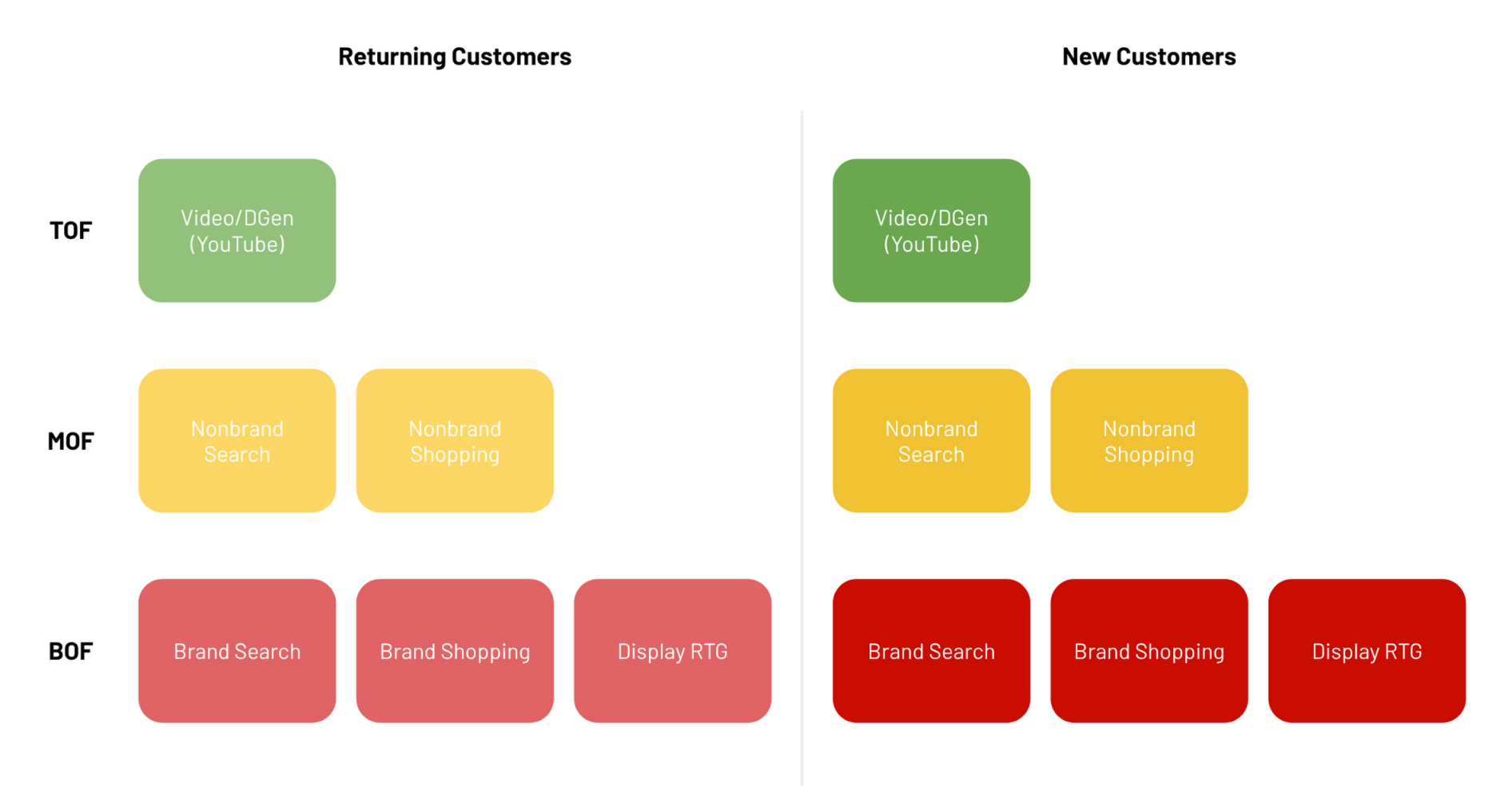
Breaking your account into countless micro-campaigns to avoid overlap can starve Google's automated bidding of necessary signals. While each segment theoretically warrants its own incrementality modifier and ROAS target, excessive fragmentation is untenable. Fortunately, many segments can be combined with minimal overlap risk.
Make it stand out
This is probably overkill.
Here is a proven, streamlined campaign structure for most mid-market ecommerce brands:
| Campaign | Placement | ROAS target | Targeting |
|---|---|---|---|
| Brand search | Search only | Extremely tight | Brand terms only |
| Brand shopping | Shopping only | Tight | Feed-based |
| Demand Gen — Static | Discover/Gmail only | Tight | Site visitors only |
| Non-brand search (AI Max or Standard) | Search only | Moderate | Non-brand, managed via negatives |
| Non-brand shopping | Shopping only | Moderate | Feed-based |
| Demand Gen — Video | YouTube only | Loose | Audience-based |
Six campaigns, six different incrementality profiles, zero cannibalization. Compare that to one PMax campaign trying to serve all masters with a single ROAS target, or a PMax + AI Max combo fighting over the same search queries. The dedicated structure is simply cleaner, and more profitable.
When PMax Does Make Sense
PMax isn’t totally useless. There is one* scenario where it genuinely shines:
You're a small advertiser (< $10-15K/mo in Google spend) and you don't have enough conversion volume to feed separate campaigns.
If splitting into Brand Search, Non-Brand Search, Shopping, YouTube, and Display means each campaign gets 5 conversions per week, you'll never exit the learning phase. PMax consolidates signal across placements and can actually perform better than the sum of its under-fed parts.
But even in this case (my brothers and sisters in Christ this is non-negotiable), you must separate Brand from Non-Brand. These are fundamentally different incrementality profiles. A combined Brand + Non-Brand PMax campaign will always over-optimize to brand terms and under-serve your non-brand growth.
*okay also you need to use PMax now for local maps. But we’re talking ecom here, go home local PPC nerds.
“PMax is for the Lazy and the Weak!”
PMax is a solution to a consolidation problem, not an incrementality problem. It was designed for advertisers who couldn't manage multiple campaigns, not for advertisers who understand that different placements deliver fundamentally different business value.
If you have the volume and the testing infrastructure to measure incrementality, you owe it to your P&L to split these placements out and manage them under their own assumptions. PMax will never beat a properly structured account that accounts for the incrementality gradient across placements, because PMax was never designed to try.
This post draws on incrementality testing across dozens of D2C brands at varying spend levels. The specific numbers are directional ranges from our work — your results will depend on your brand, category, and measurement approach. If you're running geo holdout tests or other incrementality measurement, we'd love to hear what you're seeing.