The EU AI Act: What DTC & Ecommerce Brands Need to Know
TL;DR for DTC and Ecommerce Brands:
The new EU AI Act is a big swing at regulating artificial intelligence. If you’re running a DTC or ecommerce brand targeting customers in the EU, this is your cue for more transparency, more paperwork, and a lot more explaining how your AI actually works, especially if you’re using it for things like customer experience, personalization, ads, or automation. It doesn’t matter where a brand is based; if AI touches even one EU customer, this applies to you and your brand. The compliance lift will be real, but if you get ahead of it, you should be able to turn this regulation into a trust-building superpower.
In this post, we’ll break down the EU AI Act in non-legalese. We’ll start with the rules (segmented by the levels of risk the act establishes), then move to what this changes, how steep the penalties are, and how we recommend you prepare.
AI Rules, Categorized by Risk
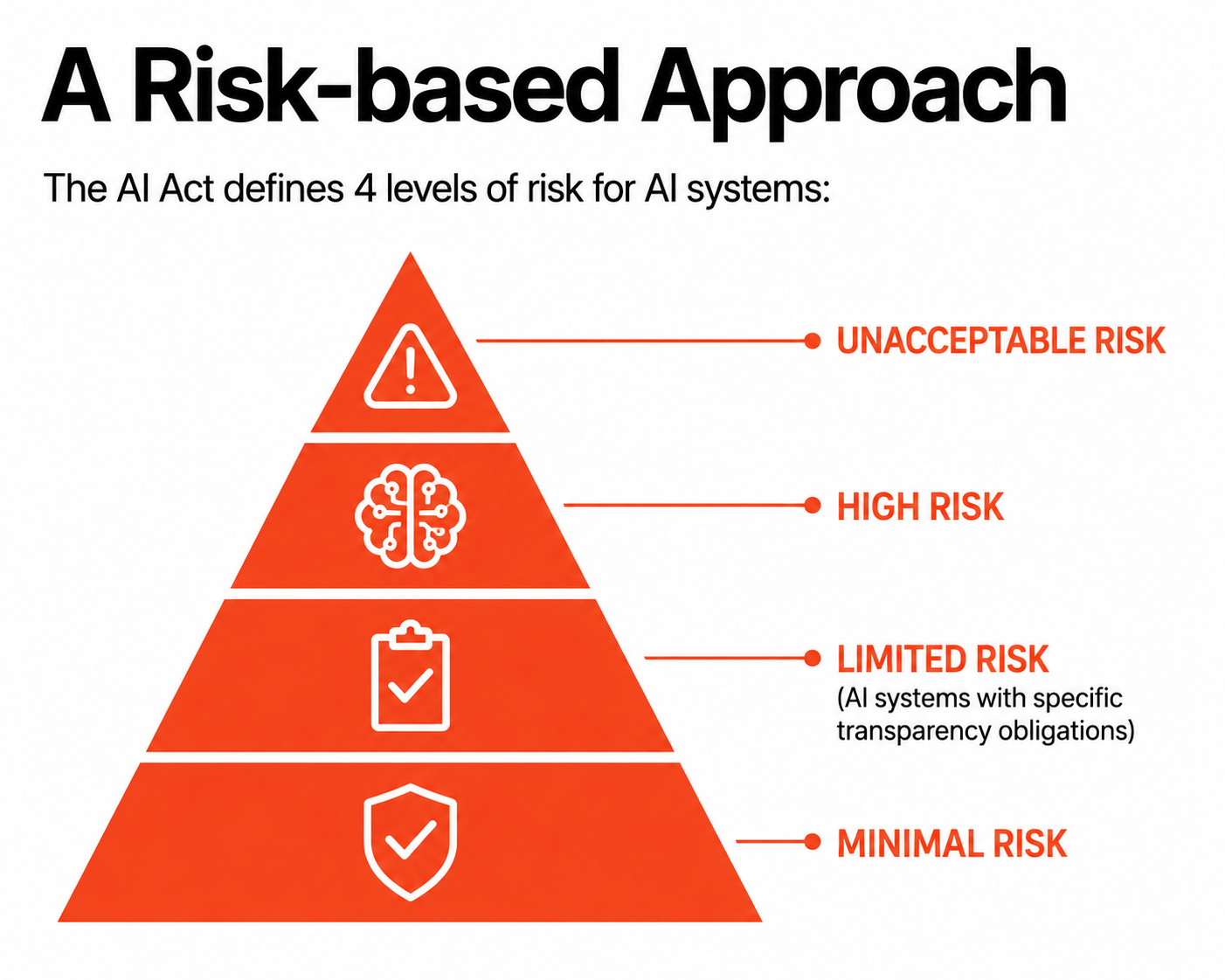
The EU Act sorts AI systems into four risk levels with corresponding rules:
Unacceptable Risk: Banned outright (e.g., social scoring, exploitative targeting of children, manipulative chatbots).
High Risk: Strict requirements, including risk assessments, detailed documentation, and pre-market conformity checks. This covers AI used in credit, employment, biometric identification, and some consumer profiling.
Limited Risk: Not as strict, but you still need to be upfront. Like letting people know when they’re chatting with a bot, getting recommendations, or seeing AI-generated content.
Minimal Risk: Most other uses, like internal automation, are barely regulated.
If you’re using AI for ads, personalization, product recs, chatbots, or data parsing (like with a customer list), you’re probably in the limited or high-risk zone. If this applies to you, changes you need to make:
Transparency: If your website, ad, or customer service uses AI (especially chatbots or recommendation engines), you must clearly inform users they’re interacting with AI.
Documentation: You need to keep receipts on how your AI is trained, what data you’re feeding it, how it makes decisions, and what risks you’ve spotted. This is especially important if you’re in the high-risk zone.
Data Privacy: If your AI processes sensitive data (like health, ethnicity, or financial info), you’ll need explicit consent from the user.
Accountability: Regular audits, risk assessments, and the ability to explain AI-driven decisions are mandatory for high-risk use cases.
Penalties: Like with GDPR, penalty fines can reach up to €35 million or 7% of your brand's global revenue.
Get breakdowns like this one before the fines start rolling in. Subscribe to the newsletter.
What’s New?
Global Reach: The law applies to any business whose AI touches EU citizens, even if you’re US-based.
General-Purpose AI Rules: Foundation models (like GPT-type systems) must meet transparency and risk documentation standards.
Customer-Facing AI: Even if your AI is just a chatbot or product recommender, you may need new disclosures and documentation.
Ad & Content Rules: AI-generated humans (synthetic models/influencers) in marketing must be clearly labeled (this is similar to New York's recent AI law requiring AI-generated visuals to contain conspicuous indication of it being AI)
Implementation Delays & Reliefs: Some deadlines have been pushed back, however we highly recommend you start prepping ASAP.
What Are the Consequences?
Steep Fines: Breaches can be punished with fines up to €35 million or 7% of global annual turnover (whichever is higher), similar to GDPR.
Reputational Risk: Early enforcement will likely focus on high-profile brands and visible compliance failures.
Platform Responsibility Shift: The law puts the onus on brands and their agencies, not ad platforms or tech providers.
Contractual Risk: If your partners or vendors aren’t compliant, you could be liable.
Recommended Actions to Mitigate Contractual AI Compliance Risk
Require partners to provide documentation about how their AI systems work, what data they use, and their risk assessments. This is especially important for high-risk functions or content.
Secure indemnification clauses so that the vendor or partner is responsible for legal costs, penalties, or losses arising from their non-compliance.
Clearly delineate who is responsible for what. Especially in joint projects or campaigns (e.g., who handles disclosures, data privacy, and risk assessments).
Ensure you can terminate the partnership swiftly and without penalty in the event of serious or repeated non-compliance.
How You Prepare
Audit your AI stack and functions: Make a list of every tool, app, or process using AI for customer stuff, personalization, or ads. Catalog how you’re using each one. Figure out which ones are high risk and which are just limited risk.
Update your disclosures: Anywhere customers interact with AI (your site, app, ads), make it obvious. No hiding it in the fine print, especially if you’re using chatbots or personalized recs.
Level up your documentation: Keep track of how each AI system is trained, what data goes in, and how it spits out results. If you’re in the high-risk camp, get ready for more paperwork and risk reviews.
Review data privacy practices: Make sure you’ve got clear user consent for sensitive info, and your security is up to EU standards.
Standardize your compliance process: No more patchwork fixes. Build a repeatable process for all teams and platforms. Templates for disclosures, checklists for every new campaign, and make it easy for everyone.
Train your team: Everyonefrom creative to product to your agency partners needs to know what’s in scope, what needs a disclosure, and how to handle AI-powered content.
Monitor regulatory updates: The EU AI Act rollout is phased, and guidance is still evolving. Track new rules, especially if you operate in various countries.
Honest Answers to Questions Brands Are Asking
“Does this apply to us if we’re not in the EU?” Yes, if EU users interact with your AI-powered tools, you’re in scope. The law is extraterritorial.
“Do I need to label every AI-generated product photo?” No. Only images or video depicting AI-generated humans (models, spokespeople, customers) require clear labeling. Product-only or background images don’t, unless they interact as a human performer.
“What about influencer marketing with AI models?” If your campaign uses AI-generated humans, you must disclose this as AI in all EU-facing media. This is similar to New York’s synthetic performer disclosure law but broader in scope.
“Will this kill AI innovation in ecommerce?” No, but it does mean more accountability. Transparency can be a competitive advantage, and early movers will build more trust with customers.
“What’s the penalty if we miss something?” Fines can be steep: up to €35 million or 7% of global turnover for serious breaches. Most mistakes will get a warning and a chance to fix, but don’t count on endless leniency as enforcement ramps up.
Why This Isn’t Just a Platform Issue
The EU AI Act puts the responsibility squarely on you and your marketing agencies, not on ad or host platforms like Meta, Google, or Shopify. Platforms might give you some tools or tips, but at the end of the day, you’re the one on the hook. Make sure your creative partners and vendors know the rules, and update your contracts so everyone’s clear on who’s doing what.
The Bottom Line
The EU AI Act will change the standard operating procedure for using AI in DTC and ecommerce. If you are proactive, transparent, organized, and clear on the actions that must be taken, you’ll build trust and dodge the big mistakes. Build the compliance muscle now, and you’ll be ready for whatever AI rules come next.
Foxwell Founders keeps you ahead of the regulatory shifts, the platform changes, and the AI tools actually worth your time, straight from operators navigating it all in real time.
Don't find out the hard way. Join Foxwell Founders now and stay ahead of what's actually coming next.
Note: This blog was written by a human, with AI assistance in drafting and synthesizing regulatory guidance, and final edited by a human.